
Periodontics in Barcelona
Because the gums also need care
Do your gums bleed when you brush? Do you take it as normal because it's always been that way? It shouldn't be. Bleeding is your mouth's way of telling you something isn't right.
At Clínica Dental Sancho we have spent more than 35 years treating periodontal disease. The good news is that, when detected early, it can be treated. And when treated well, the results last.
Book an appointment — we'll assess your gums with no commitment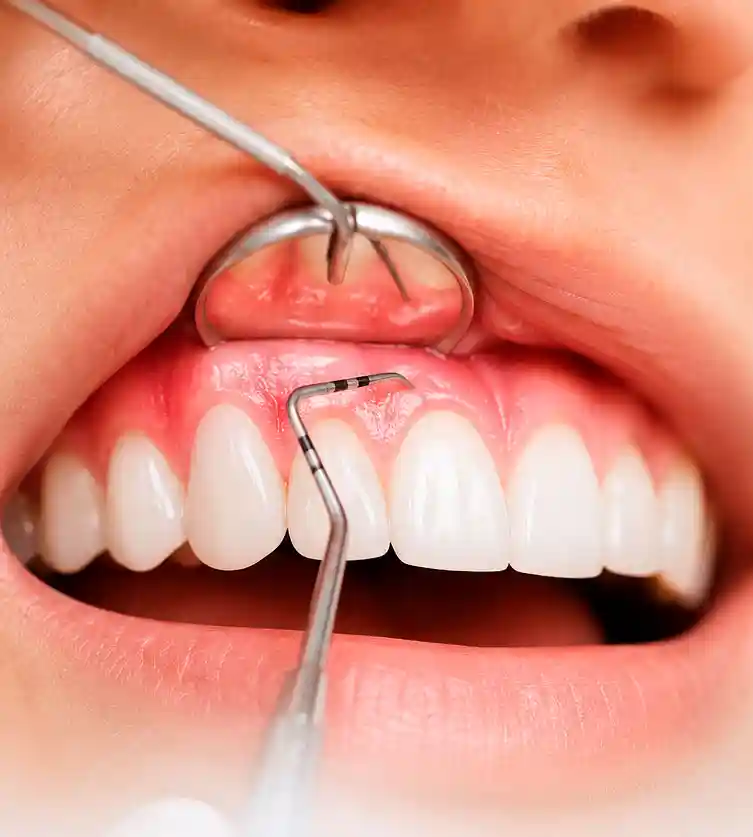
What is periodontitis and why shouldn't it be ignored?
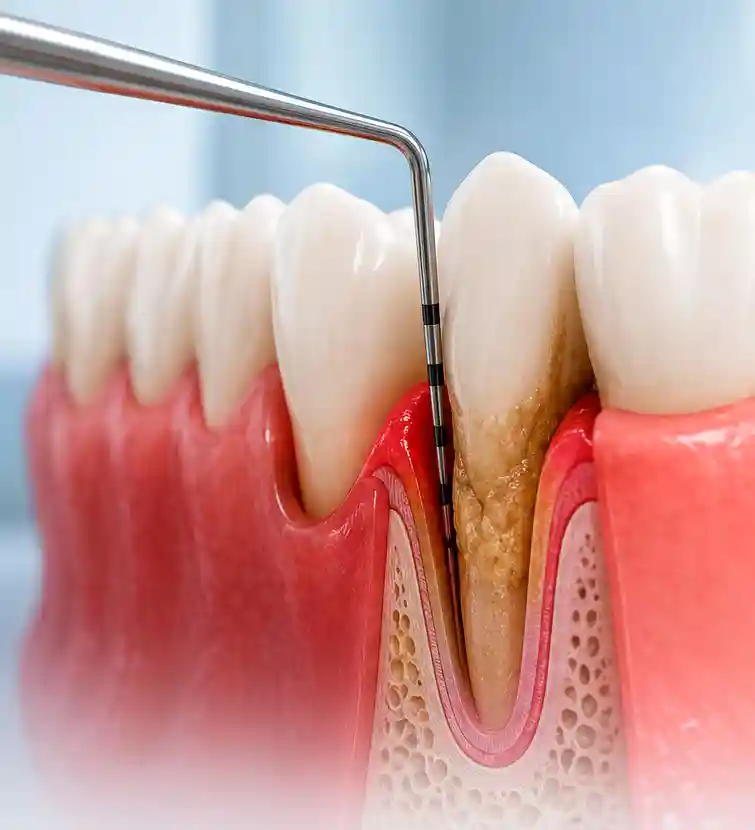
The gums are the support for your teeth. When they become inflamed and the infection advances, they start to separate from the tooth, the bone that supports it deteriorates and, if untreated, the tooth ends up moving or being lost. All of this often happens without pain. That's why it's so easy to ignore for years.
Periodontitis isn't just an oral problem. Research in recent years links it with cardiovascular disease, poorly controlled diabetes and complications during pregnancy. Caring for your gums means caring for your general health.
Signs there could be a problem
- Your gums bleed when brushing or flossing
- You have persistent bad breath that doesn't go away with usual hygiene
- Your teeth look longer than normal — the gum has receded
- There is sensitivity to cold or heat at the neck of the tooth
- A tooth moves slightly or has changed position
- You see the gum swollen, reddish or oozing
Gingivitis and periodontitis — they're not the same
Gingivitis — the initial, reversible stage
Gingivitis is inflammation of the gums when there is not yet any damage to the bone. It is reversible with a good professional cleaning and improved hygiene at home. It is the stage before periodontitis.
Detecting it at this stage is ideal: the treatment is simpler, faster and the prognosis is excellent.
Periodontitis — when it has already affected the bone
Periodontitis is when the infection has already affected the bone that supports the teeth. In this case it is not reversible — lost bone does not come back — but it can be stopped and stabilised with the right treatment.
That's why the goal is always to detect it before it reaches this stage.
What factors increase the risk?
How we treat periodontal disease at our clinic
Periodontal treatment isn't dramatic. It doesn't hurt. And the results, when the patient keeps up with the subsequent maintenance, are very good. The most important thing you'll do is take the first step.
Complete periodontal diagnosis
We carry out a periodontal probing: with a fine probe we measure the depth of the spaces between the gum and each tooth. This tells us exactly which teeth are affected and to what degree. We also look at the X-rays to assess the state of the bone. With all that, we have the complete map of what needs treating.
Scaling and root planing
This is the basic treatment for periodontitis. It involves removing the tartar, plaque and bacteria that have built up below the gum, on the roots of the teeth. It's done with local anaesthesia by zones so you don't feel discomfort. Several sessions are usually needed depending on how extensive the problem is.
Re-evaluation
A few weeks after the scaling, we probe again to see how the gums have responded to the treatment. In many cases, this is enough. In others, if there are periodontal pockets that haven't responded well, a more localised surgical intervention may be necessary.
Periodontal maintenance
Once the disease is stabilised, maintenance is essential to stop it coming back. We schedule periodic professional cleanings —usually every 3 or 4 months at first— and teach you the home hygiene techniques that help most in your particular case. Periodontics isn't cured once and that's it: it's controlled for life.
If you want implants, you first have to look after your gums
One of the most important factors for the success of a dental implant is periodontal health. An implant placed in a mouth with active periodontitis is much more likely to fail — the same bacteria that destroys the bone around the natural tooth can do the same around the implant.
That's why at Clínica Dental Sancho, when a patient wants implants and has periodontal disease, we always treat the gums first and wait until they are stabilised. It's not putting up obstacles — it's doing it well so the result lasts.
If you're thinking about implants and have doubts about whether your periodontal situation could affect the result, tell us at the first visit. We assess everything together. And if periodontitis has already caused the loss of a tooth, we'll also explain the available dental prosthetics options.
Frequently asked questions about periodontics in Barcelona
Is it normal for gums to bleed when brushing?
No. Bleeding when brushing is a sign of inflammation, not something to accept as normal. It can be gingivitis —the initial, reversible stage— or already periodontitis. The important thing is to assess it so you know where you stand and act before it advances.
Does periodontal treatment hurt?
Scaling and root planing is done with local anaesthesia by zones, so during the procedure you shouldn't feel pain. Afterwards there may be some gum sensitivity for a few days, which is well controlled with common painkillers. Most patients are surprised at how well they tolerate the treatment.
Can periodontitis be cured?
Periodontitis isn't cured in the strict sense — lost bone doesn't regenerate on its own. But it can be stopped and stabilised with treatment, and kept under control with periodic check-ups for the rest of your life. When maintenance is done well, it's possible to keep your teeth for decades even with diagnosed periodontitis.
How many sessions does the treatment need?
It depends on the extent and severity. A case of gingivitis can be resolved with a single deep cleaning. A case of generalised periodontitis may require 3 or 4 scaling sessions plus re-evaluation and maintenance visits. We explain it all at the initial diagnosis.
Can I have periodontitis if I take good care of my teeth?
Yes. Genetic predisposition plays an important role in periodontal disease. Some people develop periodontitis despite having correct oral hygiene. That's why periodic check-ups are important: detecting the problem early is what makes the difference.
Can periodontitis affect my general health?
Yes, and there is more and more evidence of it. Chronic periodontal infection has been associated with higher cardiovascular risk, poorer diabetes control, premature birth and other systemic conditions. Caring for the gums isn't just a dental matter.
How much does periodontal treatment cost in Barcelona?
It depends on the diagnosis: treating mild gingivitis isn't the same as advanced periodontitis that requires several sessions. At the first visit we make the full diagnosis and give you a detailed written quote before starting. No surprises. Contact us for an assessment.
You've been ignoring what your mouth tells you for a while. You can stop now
Bleeding gums don't heal on their own. The tartar that builds up under the gum doesn't go away with a brush. And the bone lost to periodontitis doesn't come back.
But all of that can be stopped. With a clear diagnosis, a well-done treatment and the right maintenance, it's possible to keep your teeth far longer than many people think when they arrive at our clinic.
We have spent 35 years seeing the difference that acting in time makes. Call us.