
Bone regeneration in Barcelona — when you're told you don't have enough bone for an implant
Many people come to our clinic after being told elsewhere that they aren't candidates for dental implants due to lack of bone. It's a frustrating situation — you've lost a tooth, you want a fixed solution, and you're told it can't be done.
In many of those cases, it can be done. Bone regeneration is a technique that rebuilds the lost bone to create the conditions needed to place the implant. It isn't always possible, but it happens more often than people think.
Get a second opinion — we'll assess your case with no commitment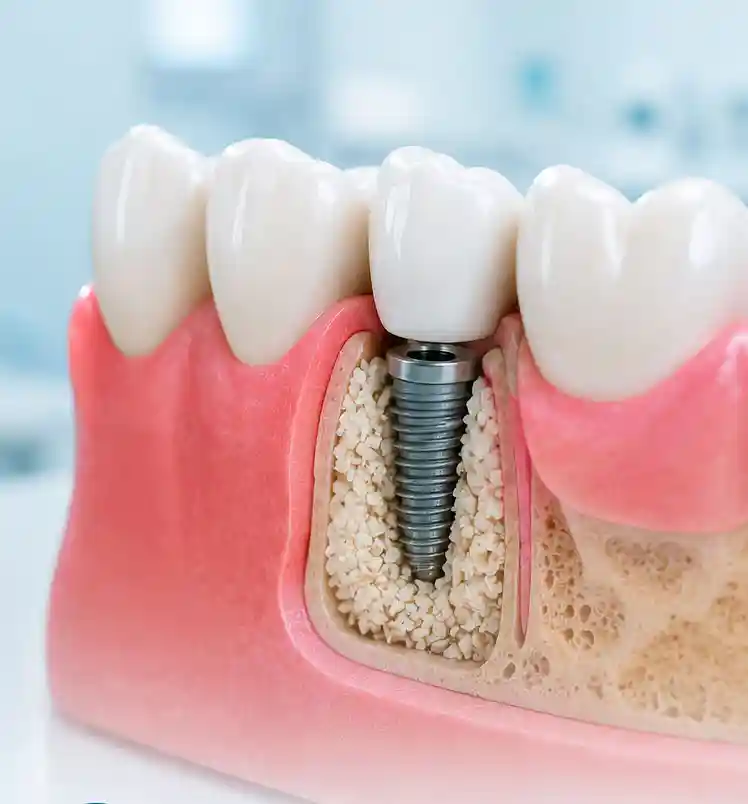
What is dental bone regeneration and why is it needed?
When a tooth is lost, the bone that supported it begins to resorb. The longer you go without a tooth, the more bone is lost. Periodontal disease also causes this bone loss progressively. At some point, that bone may be insufficient to anchor an implant safely.
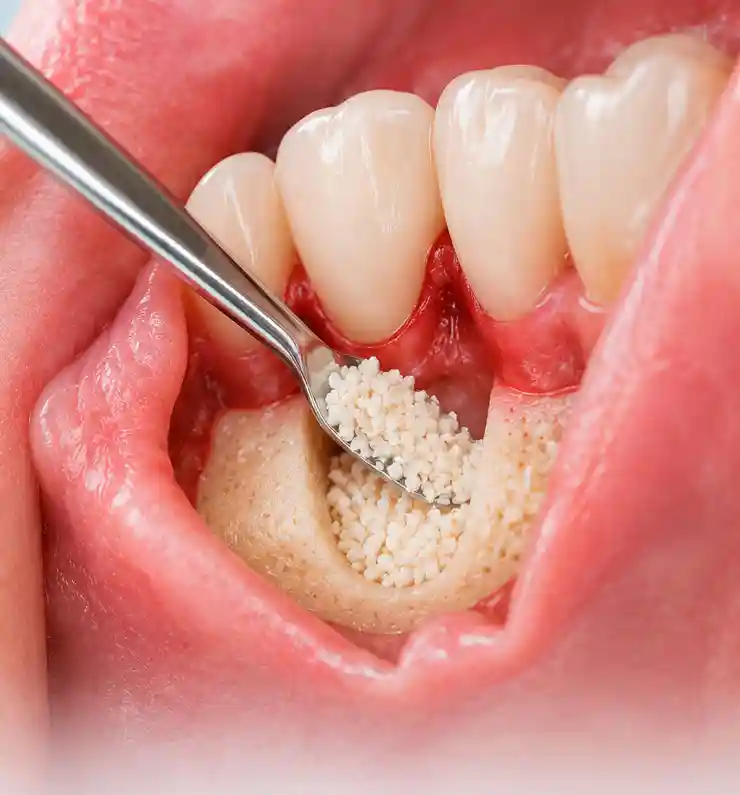
Guided bone regeneration (GBR) is a technique that involves placing graft material in the deficient area to stimulate the growth of new bone. That new bone, once mature, serves as a base to place the implant with the same guarantees as if it had never been lost.
What materials are used?
- Autologous bone: from the patient — the most compatible, but it requires a second donor area
- Bank or bovine-origin bone: widely used, safe and predictable
- Synthetic materials: calcium phosphate and other biocompatible materials
- Collagen or PTFE membranes: placed over the graft to protect it during healing
What is the process?
Assessment and planning
We carry out a radiological study —usually a dental CT scan— to precisely measure the available bone volume and decide whether regeneration is necessary, how much bone needs to be recovered and which technique makes the most sense for your case.
Regeneration procedure
The regeneration is carried out with local anaesthesia. We open the gum, place the graft material in the deficient area, cover it with the protective membrane and suture. The procedure usually lasts between 30 and 60 minutes.
Maturation period
The new bone takes between 4 and 9 months to mature, depending on the volume to be regenerated. During this time we follow up with periodic checks to verify that the regeneration is progressing well.
Implant placement
Once it's confirmed that the bone is mature and has the necessary volume, we proceed to place the dental implant. From here the process is the same as for any standard implant.
Frequently asked questions about dental bone regeneration
Does bone regeneration hurt?
The procedure is done with local anaesthesia, so you don't feel pain during it. In the following days there may be swelling and discomfort, more intense than a simple extraction, which is managed with the painkillers and anti-inflammatories we prescribe. Most patients tolerate it well.
Does bone regeneration always work?
In experienced hands and with good case selection, the results are very predictable. There are factors that reduce the chances of success: tobacco is the most important, followed by uncontrolled diabetes. We explain it before deciding.
How long is there between the regeneration and the implant?
Between 4 and 9 months, depending on the volume regenerated. It's waiting time, but it's necessary for the bone to be mature and for the implant to have the right anchorage.
Can the regeneration and the implant be done at the same time?
In some cases yes — it's called simultaneous regeneration. It depends on the bone defect: if it isn't very large and there's enough bone to stabilise the implant from the start, it can be done in the same procedure. If the defect is larger, it's safer to do it in two stages.
How much does bone regeneration cost in Barcelona?
It depends on the volume to be regenerated and the materials used. We give you the detailed quote before starting. Usually the cost of the regeneration is included in the overall quote for the dental implants treatment. Contact us for an assessment.
If you've been told there's no solution, tell us about your case
Not all cases of bone loss are the same. There are situations where regeneration is very predictable and others where it isn't the most suitable option. What we can always do is assess it and give you an honest answer.
At Clínica Dental Sancho we have spent more than 35 years solving complex cases. If you're looking for a second opinion, we're here.