
Dental prosthetics in Barcelona
Restore the function and confidence of your smile
Some people have spent years avoiding certain foods. Covering their mouth when they laugh. They've stopped smiling in photos. If any of this sounds familiar, you're not alone — and there's a solution.
At Clínica Dental Sancho we have spent more than 35 years giving people back something that goes far beyond teeth: the peace of mind to eat, talk and smile without thinking about it.
Book your first consultation, no commitment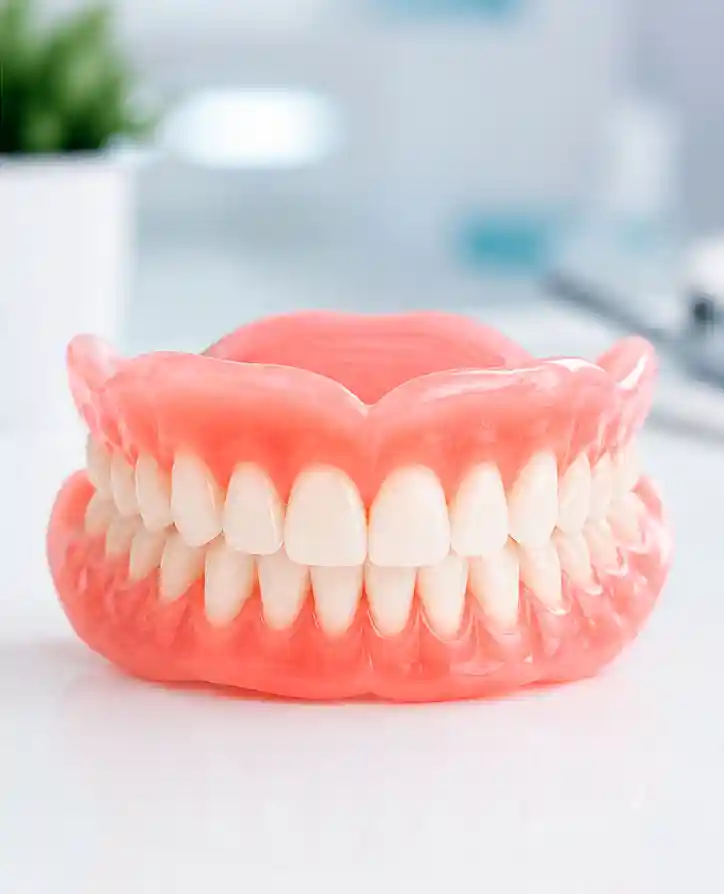
What is a dental prosthesis and when is it needed?
Losing one or several teeth is more common than it seems. Advanced decay, periodontal disease, accidents or natural wear over time can leave gaps that affect not only aesthetics, but how you chew, how you speak and how you feel when you're with other people.
A well-made dental prosthesis isn't a patch — it's a functional solution that gives back what was lost. And when it's custom-made and well fitted, it can't even be noticed.
A dental prosthesis is a restoration that replaces one or several missing teeth. It can be fixed —anchored to the teeth or implants and not removed— or removable, which the patient can take out to clean.
At Clínica Dental Sancho we make every prosthesis to measure: in shape, colour and size, so it fits naturally with the rest of your dentition and with your face.
Types of dental prosthesis — which one is right for you
There's no prosthesis that's better than another in the abstract. There's the one that best suits your specific situation: how many teeth are missing, where they are, the condition of the neighbouring teeth and what you want to recover. Here we explain the most common options.
Dental crown
A crown is a cap that covers a damaged or weakened tooth to protect it and restore its shape and function. It's used when the tooth can no longer be rebuilt with a simple filling — for example, after a root canal or when the loss of structure is very large.
Today's crowns, made in ceramic or zirconia, are practically indistinguishable from a natural tooth. None of your acquaintances will know you're wearing one.
Fixed dental bridge
A bridge replaces one or several missing teeth by resting on the neighbouring teeth, which act as pillars. It's a fixed solution — not removed — and restores the ability to chew and the aesthetics very effectively.
To place a bridge, the supporting teeth need to be slightly trimmed. It's something we assess case by case: if the neighbouring teeth are healthy, sometimes a solution that doesn't involve them is preferable.
Removable prosthesis — partial or complete
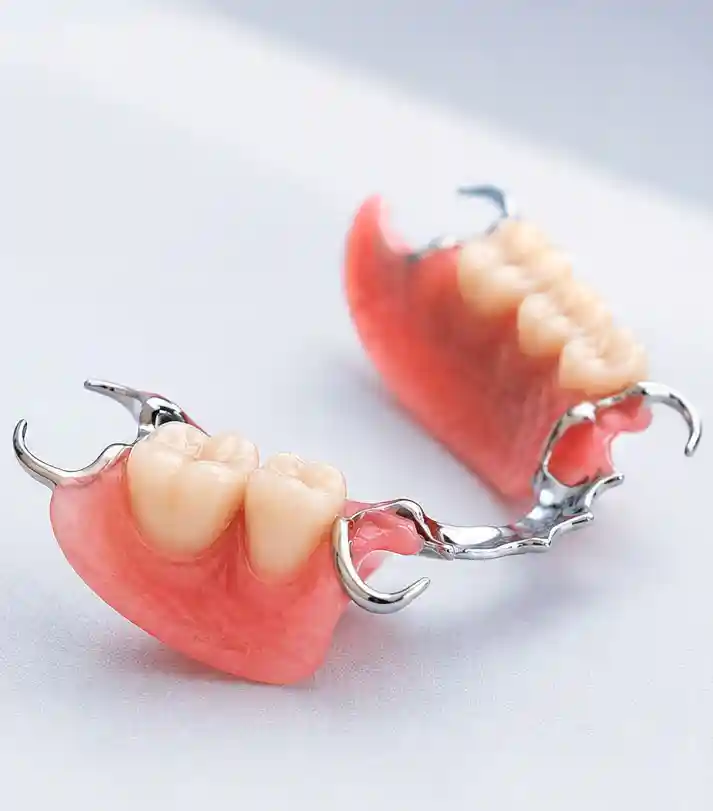
The removable prosthesis is the one the patient can take out to clean. It can be partial, when some natural teeth remain to act as anchorage, or complete, when all the teeth in an arch have been lost.
Today's removable prostheses are far more comfortable, stable and aesthetic than those of decades ago. With current materials and a good fit, the difference from what many people imagine is enormous.
What makes the difference in a well-made prosthesis
A prosthesis isn't just an object. It's something that will be in your mouth every day, that will change how you eat, how you speak and how you look at yourself in the mirror. That's why at Clínica Dental Sancho we take it very seriously — from the first diagnosis to the last adjustment.
Made to measure — we don't use standard sizes
Every prosthesis we place is made specifically for you. We take measurements, adjust the colour with real samples and review the result before the final placement. The goal is for it to fit naturally with your mouth and your face, not just to cover a gap.
35 years adjusting prostheses — we know what matters
Experience in prosthetics shows in the details: how the bite closes, how the phonetics turn out, how it feels when chewing. We have spent more than three decades doing this work and we know that a prosthesis that doesn't fit well after a few weeks isn't a well-made prosthesis.
Follow-up until you're completely comfortable
Placement isn't the end of the process. The first weeks with a new prosthesis require adjustments: the mouth adapts, small discomforts appear that need correcting. At our clinic we do the necessary follow-up until you're completely comfortable with your prosthesis.
We explain all the options, without pushing you to any
There are cases where a dental implant is better than a bridge. And cases where a bridge is perfectly valid and simpler. We explain the differences, the pros and cons of each option, and you decide with all the information on the table.
What is the process for getting a prosthesis?
The number of visits and the total time depend on the type of prosthesis. Here we explain the general process so you know what to expect.
Diagnosis and planning
At the first visit we assess the state of your mouth: the remaining teeth, the health of the gums, the bite and the bone. With all that information we explain what options you have and which we recommend for your case.
Preparing the tooth or the area
If it's a crown or a bridge, we prepare the supporting teeth. In the case of a removable prosthesis, we take the necessary measurements and record your bite. At this stage we also choose the colour of the prosthesis.
Manufacturing in the laboratory
The measurements are sent to the dental laboratory, where your prosthesis is made to measure. This process usually takes between one and two weeks depending on the type of work. During this time, if necessary, we fit a temporary prosthesis.
Trial and adjustment
Before the final placement, we try the prosthesis to check the fit, the bite and the aesthetics. It's common to make small touch-ups at this stage. Better to correct here than later.
Final placement and follow-up
Once everything is correct, we place the final prosthesis. In the first weeks we'll ask you to come for check-ups to make sure everything is fine and to make any adjustments you need. The process doesn't end until you're completely comfortable.
Frequently asked questions about dental prosthetics in Barcelona
How long does a dental prosthesis last?
It depends on the type and the care. A well-made crown or bridge can last 15-20 years or more. A removable prosthesis usually needs revision or replacement every 5-10 years, because the mouth changes over time and the fit can lose precision. With maintenance and periodic check-ups, the lifespan is considerably extended.
Can you tell it's a prosthesis?
With today's materials —ceramic, zirconia, high-quality resins— the aesthetic result is very natural. A well-made crown or a well-fitted prosthesis can't be told apart from natural teeth at a glance. The shade, translucency and shape are worked on so it matches the rest of your dentition.
Does getting a prosthesis hurt?
Placing crowns and bridges is done with local anaesthesia, so during the procedure you don't feel pain. With a removable prosthesis there's no intervention: there may be some discomfort in the first few days while the mouth adapts, which goes away with the adjustments.
Can I eat normally with a prosthesis?
Yes, that's precisely the goal. With a well-fitted prosthesis you can eat practically everything. In the first weeks we recommend starting with soft foods while you get used to it, but the goal is for you to recover a completely normal diet.
How much does a dental prosthesis cost in Barcelona?
The price varies depending on the type of prosthesis, the number of teeth and the materials. A crown doesn't cost the same as a three-unit bridge or a complete prosthesis. At the first visit we give you a detailed written quote before starting anything. No surprises. Contact us for an assessment.
What's the difference between a bridge and an implant?
The bridge rests on the neighbouring teeth, which have to be trimmed, and doesn't require surgery. The dental implant replaces the root of the tooth and doesn't affect the adjacent teeth, but it requires a surgical procedure. Which is better depends on your specific case: we explain it at the consultation with all the options on the table.
You've been adapting for too long. It's time the prosthesis adapts to you
Some people have spent years living with a prosthesis that doesn't fit well, that bothers them when chewing or that they've simply stopped using. And some people know they need a prosthesis but keep putting it off.
At Clínica Dental Sancho we welcome you without judgement and without rushing. We assess you, explain what options you have and decide together which is the best path. We've been doing it for 35 years.