
Teeth whitening in Barcelona: what is the best way to whiten your teeth
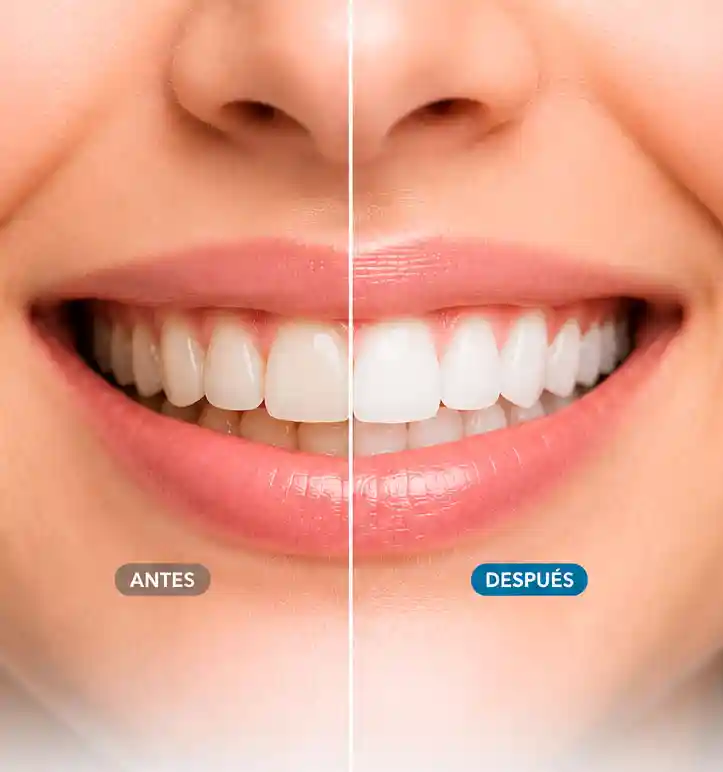
Teeth whitening has become one of the most in-demand cosmetic treatments in recent years. More and more people want to improve the appearance of their smile and achieve whiter teeth. But there is also a great deal of misinformation about which methods really work, which ones are safe and what results can be expected.
If you are researching how to whiten your teeth, you have probably come across everything: from home remedies with activated charcoal to in-clinic laser treatments. The key is knowing how to tell what really works from what simply raises expectations.
At Clínica Dental Sancho we have been treating patients in Barcelona for more than 35 years. We see a very clear pattern: most people have tried some home solution before coming to the clinic, but very few have obtained real results with those methods.
In this article we explain in detail what the best way to whiten your teeth is, what options exist, which ones are backed by science and why some simply don't work.
Why teeth darken over time
Before talking about treatments, it helps to understand why teeth lose their natural white colour. Tooth darkening can be due to several factors, and not all of them respond in the same way to the different whitening methods.
The most frequent causes are:
- Regular consumption of coffee, tea, red wine or cola drinks
- Tobacco — one of the most powerful agents in tooth darkening
- Natural ageing of the tooth — the inner dentine darkens over the years
- Build-up of plaque and tartar on the surface
- Genetic factors — some people are more predisposed to yellowish teeth
- Staining from tetracyclines or other medicines taken during dental development
This distinction matters because tooth colour does not depend only on the surface. The dentine — the inner layer of the tooth — also darkens with time, and many products that act only superficially cannot achieve a real whitening effect. That is why home methods have a very low ceiling in terms of results.
Whitening at home: what works and what doesn't
Interest in at-home teeth whitening has grown remarkably. Accessibility and low cost mean many people try these products before consulting a professional. However, from a clinical point of view, they have important limitations.
Whitening toothpastes
Whitening toothpastes are designed to remove external stains from the tooth surface, but they cannot modify the internal colour. The change they produce is very limited and in many cases barely noticeable. They are useful as maintenance after professional whitening, not as a treatment in themselves.
Activated charcoal
It has become popular as a natural alternative, but there is no scientific evidence supporting its ability to whiten teeth. Moreover, frequent use can be abrasive to the enamel, which in the long run can lead to greater sensitivity and wear.
Coconut oil and other natural remedies
Practices such as oil pulling have no scientific backing as a whitening treatment. They may have other benefits for oral hygiene, but they do not act on tooth colour.
Unsupervised whitening kits
Over-the-counter kits contain hydrogen or carbamide peroxide in very low concentrations to comply with European regulations. This greatly limits their effectiveness. In addition, applied without prior assessment or supervision, they can cause sensitivity, gum irritation or uneven results.
Professional teeth whitening: how it really works
Professional teeth whitening is the only treatment capable of changing the colour of the tooth from the inside. The products used in the clinic contain hydrogen peroxide in higher concentrations than over-the-counter products, formulated to penetrate the enamel and act on the dentine.
Before starting any treatment, we carry out a personalised assessment: we check the condition of the teeth and gums, identify possible contraindications and determine the type of whitening best suited to each case. Not all teeth are the same, nor do they respond the same way.
Types of professional whitening
At Clínica Dental Sancho we offer three types of professional whitening:
In-clinic whitening — in a single session of approximately one hour. We apply the whitening gel directly onto the teeth, protecting the gums with a specific barrier. The result is visible from the first session.
At-home whitening — with custom-made trays and a low-concentration gel to use at home for several weeks. The process is more gradual, but it allows very precise control of the final result and is ideal for cases seeking progressive change.
Combined whitening — we start in the clinic to achieve a quick initial result, and continue with the at-home treatment to maximise and prolong the effect. It is the modality that delivers the best results in most cases.
In-clinic vs. at-home whitening: the differences that matter
Comparing both options helps to understand why there is such a difference in results.
Effectiveness
Professional whitening uses agents at the right concentration to achieve visible, lasting results. Home products, due to regulatory and safety limitations, work at much lower concentrations that limit the effect.
Safety
Professional treatment protects the enamel and gums at all times. A prior assessment is carried out to detect cavities, periodontal problems or any contraindication. Unsupervised home methods can cause severe sensitivity, irritation or wear if not applied correctly.
Personalisation
Each patient has a different starting shade, a specific clinical history and their own expectations. In the clinic, the treatment adapts to all of that. At home, the product is the same for everyone.
Control of the process
During professional treatment, the result is evaluated and adjusted if necessary. That makes it possible to correct unevenness, manage sensitivity and optimise the result. Without supervision, that is not possible.
Who is teeth whitening suitable for?
Professional whitening is a valid option for most adults with natural teeth and good oral health. But there are situations in which it is not the most appropriate solution, and it is important to know this before starting.
Cases where whitening works well
- Teeth yellowed by ageing or habits (coffee, tea, wine, tobacco)
- People who want to improve their smile quickly and safely
- As preparation before other cosmetic dentistry procedures such as veneers
- As a treatment before a wedding, an important event or an image change
Cases where whitening is not the best option
- Teeth with intense grey tetracycline stains — whitening has little effect in these cases; dental veneers are usually a better solution
- Teeth with active decay or untreated periodontal disease — that must be resolved first
- Existing crowns, bridges or veneers — whitening only lightens natural teeth
- Pregnant or breastfeeding women — it is postponed until afterwards
- People with very marked tooth sensitivity — assessed case by case
How long does teeth whitening last and how to maintain it
The duration of the results is one of the most frequent questions. And the honest answer is: it depends on the patient's habits.
Under normal conditions, professional whitening can maintain its results for between one and three years. The shade will gradually return, but with proper care the process is slow and predictable.
Factors that shorten the duration
- Frequent consumption of coffee, tea, red wine or soft drinks
- Smoking — one of the factors that most accelerates the loss of the effect
- Poor oral hygiene
- Skipping regular check-ups and professional cleanings
How to prolong the result
- Avoid heavily pigmented drinks during the first days after treatment — that is when the enamel is most porous
- Use a whitening maintenance toothpaste
- Keep up regular check-ups and cleanings with general dentistry
- Have annual maintenance sessions with the home tray when necessary
At our clinic we always explain these guidelines before finishing the treatment, because maintenance is part of the result.
Is teeth whitening safe?
Yes, when performed under professional supervision and with the right products. Whitening is one of the most studied cosmetic treatments in dentistry and its safety profile is very good when applied correctly.
Problems appear mainly in two situations: when uncontrolled products or inadequate concentrations are used, and when no prior assessment is made to detect contraindications.
The most frequent side effects are temporary tooth sensitivity and mild gum irritation, especially in the first hours after treatment. Both disappear on their own within one or two days and can be minimised with the right protocol.
Teeth whitening in Barcelona: what to consider when choosing where to have it done
If you are looking for a dental clinic in Barcelona for whitening, there are a few things worth considering before deciding.
- That a prior assessment is made before starting the treatment
- That they explain realistically what result you can expect in your case
- That the treatment is supervised by a qualified professional
- That products with the right concentration are used, not generic kits
- That it includes maintenance guidelines to prolong the result
What is the best way to whiten your teeth: the direct answer
After analysing all the options, the answer is clear: professional in-clinic teeth whitening is the only option capable of producing a real, lasting change in tooth colour.
Home methods have a limited role: they can serve as maintenance for whitening already done, but not as the main treatment. They are not designed for that.
If you have been thinking about improving the shade of your teeth for a while, the best starting point is an assessment at the clinic. At that first visit we evaluate the condition of your mouth, explain what result you can expect and decide together which whitening modality makes the most sense for you.
Frequently asked questions about teeth whitening
What is the most effective way to whiten your teeth?
The most effective way is professional teeth whitening at a dental clinic. It is the only treatment that acts on the internal colour of the tooth and produces visible, long-lasting results. Home methods have very limited effectiveness and are not comparable.
Do home products work for whitening teeth?
Their effectiveness is very limited. Over-the-counter kits contain low concentrations of whitening agent, so the effect on tooth colour is minimal. They can be used for maintenance after professional whitening, but not as the main treatment.
Does activated charcoal whiten teeth?
No. It has no proven ability to lighten tooth shade. It may remove some surface stains, but it does not act on the dentine. In addition, frequent use can be abrasive to the enamel.
How long does professional teeth whitening last?
It depends on the patient's habits. Under normal conditions, between one and three years. Coffee, tea, wine or tobacco consumption speeds up the loss of the effect. With good hygiene and occasional maintenance sessions, the result can be prolonged considerably.
Is teeth whitening safe?
Yes, when performed under professional supervision and with the right products. The most frequent side effects are temporary sensitivity and mild gum irritation, which disappear on their own within one or two days.
Can I have whitening if I have crowns or veneers?
Whitening only lightens natural teeth. Crowns, bridges and veneers do not respond to the whitening treatment. If you have visible restorations, this must be taken into account because the shade may end up uneven after whitening. We explain this before starting.
How much does teeth whitening cost in Barcelona?
It depends on the chosen modality and the complexity of the case. At Clínica Dental Sancho we prepare the quote at the first visit, in writing and with no obligation. Call or write to us to book an appointment.
How many sessions does teeth whitening require?
In-clinic whitening is done in a single session of approximately one hour. Home whitening requires several weeks of regular use. The combined modality brings both together and usually gives the best results.